The author cuts through the noise of phonetic drills to reveal rhythm as the true architect of native-like fluency. It is a precise diagnostic of why technical accuracy often fails to achieve a natural cadence.
Install our extension to search inside any video instantly.
what REALLY makes indian and american accents different?Indexed:
No description provided by the creator.
Here's something barely anyone talks about when they teach pronunciation. You could have perfect sounds like every single vowel and consonant could be flawless, but you could still sound like you're reading from a script. And I'm going to tell you why. It's not about the sounds, but it's about the rhythm.
Here's what's happening. In Hindi, Tamil, Marathi, Marathi, Gujarati, basically every Indian language, every syllable gets equal time and weight. So when you speak, it's like da da da da da. Every beat matters equally. It's very organized. But English doesn't work like that. In American English, the rhythm is completely different. Some syllables are loud and stretched out, and then other syllables, they just disappear. They get rushed and swallowed. So you end up with a rhythm with a rhythm like this. Da da da da da.
That's the rhythm Americans use. Let me show you what I mean. I'll say the same sentence in two ways. First, equal time for every syllable. I am going to the store to buy some things. Every word gets basically the same attention. Now, with [music] stress timing. I'll emphasize certain words. I'm going to go to the store to buy some things. [music] Let me do it one more time so you feel the difference. I'm going to go to the store to buy some things. My mouth is doing less work. It's relaxed because some syllables are getting switched together. In our native languages, if a word has four syllables, it takes four beats. [music] But in English, it's not about the number of syllables. It's about the stressed syllables. Americans put stress on certain syllables. They make them louder, longer, and more important. The other less important syllables get shrunk. So a word like tomato is actually three syllables, but the rhythm is actually tomato. See the difference? This is called stress-timed rhythm, the opposite of syllable-timed rhythm. Let's try this with a real sentence. I'm going to the store. Now with emphasis. I'm going to go to the store. Notice I said gonna. That's the rushing. Now, the thing is, you don't have to say gonna. You can say going to.
But if you do say going to, you'll still rush the syllables that don't have stress. [music] For example, I'm going to go to the store. Here we used ta instead of to. That's the rhythm doing its job. The real information is in those two words, going and store. Okay, that's all great, but here's the real question. How do you know what to stress? Like which syllables do you make big and which ones do you rush? So keep this in mind. You stress the syllables that carry meaning. The words that give you information. For the sentence, I'm going to the store, going and store give you the real meaning. And I'm to and the are just connectors. They barely carry any meaning. I'm going to the store.
Here's another sentence. I need to buy some things today. The meaningful words are need, buy, things, and [music] today. While the connectors are to and some. So, it sounds like, I need to buy some things today. Not, I need to buy some things today. In English, the content words, the nouns, verbs, adjectives, adverbs, >> [music] >> they get stressed. While the function word, the articles, prepositions, and the conjunctions get rushed. So, when you're talking, ask yourself, which words are doing the actual work here?
And make sure to emphasize those. Let me show you one more example so it's crystal clear. She said she would come to the party. The content words are said, come, and party. [music] While the function words are she, would, to, and they. She said she would come to the party. Versus, she said she would come to the party. Huge difference, right? Make sure to like and subscribe if this helped you.
Related Videos

YOU STILL CAN'T SPEAK SPANISH
plasticxinheart
126 views•2026-05-16
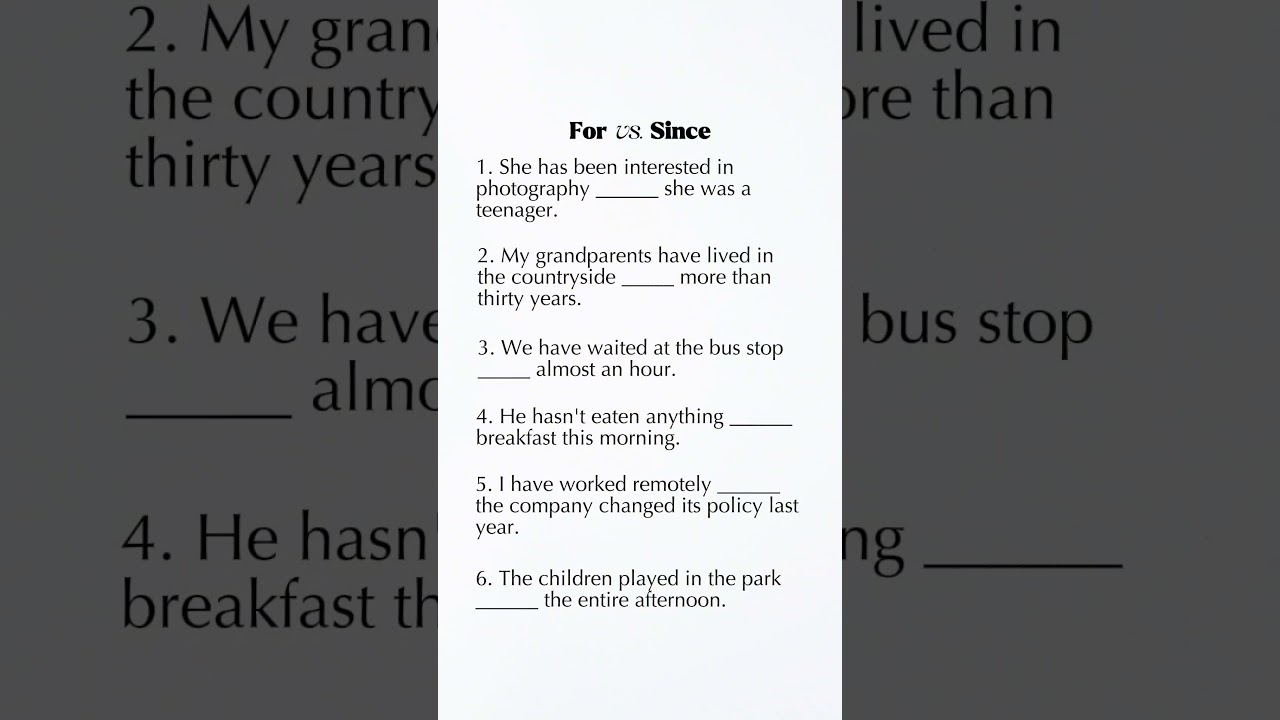
For vs Since Explained | English Grammar Quiz | Stop This Common Mistake Fast | Learn Now!
speakenglishwithjoe2023
401 views•2026-05-18

Near, Close to, Next to, Beside, Nearby & Close by in English
EnglishEvolution
7K views•2026-05-15
You Only Need 5 Tenses to Speak English Confidently, Not 12! | Inspired by Jack Ma
SlowEnglishVN
4K views•2026-05-19

Words from Indian languages borrowed in ENGLISH| Make Your Vocabulary Advanced with Prof. Sumita Roy
SumitaRoysEnglishclassroom
320 views•2026-05-17

Learn ABCD Alphabet Song A to Z | Phonics for Kids | A for Apple | English Varnamala | अ से अनार
rajrb3586
195 views•2026-05-16

#LearnEnglish with Sabrina Carpenter ✨
LearnEnglishWithTVSeries
13K views•2026-05-19

“Use of ‘THAT'S WHY’ | Speak English Like a Pro” #englishgrammar #spokenenglish #learnenglish
YOURENGLISH-2M
108 views•2026-05-17


