This pragmatic reductionism effectively applies the Pareto principle to language, prioritizing communicative utility over academic pedantry. It is a necessary reality check for learners paralyzed by the pursuit of grammatical perfection.
Install our extension to search inside any video instantly.
You Only Need 5 Tenses to Speak English Confidently, Not 12! | Inspired by Jack MaIndexed:
How To Speak English Confidently with Only 5 Tenses! Did you know native English speakers only use 5 tenses in daily conversation? You've been studying the wrong ones. 🎯 In this video, you will learn why you do NOT need all 12 English tenses to speak naturally and confidently in real conversations. ✅ The 5 tenses that cover 95% of real English conversations ✅ The difference between "I drink coffee" vs "I am drinking coffee." ✅ How to talk about the past, present, AND future naturally ✅ Why Present Perfect is a bridge between past and present ✅ Real-life examples you can use immediately ───────────────────────────── ⏱️ TIMESTAMPS 0:00 Why English Grammar Feels So Hard (And How to Fix It) 4:07 Learn All 5 English Tenses With ONE Word (Coffee Trick) 4:36 Simple Present Tense — How to Talk About Your Daily Life 7:45 Present Continuous Tense — Right Now AND Future Plans 12:11 Simple Past Tense — How to Tell Stories in English 16:13 Present Perfect Tense Explained Simply (Finally Clear!) 20:46 Simple Future with "Will" — How to Speak Naturally 24:02 All 5 English Tenses in One Example (Coffee Review) 26:00 How to Use All 5 Tenses in a Real English Conversation 27:32 5 Natural English Phrases Native Speakers Use Every Day 31:12 You Don't Need Perfect English to Speak Confidently 32:28 Speak English Out Loud 💬 Practice Challenge: Write ONE sentence about yourself using any of the 5 tenses in the comments below! We read every single one. If you understand English but still struggle to speak, this lesson will help you speak more naturally without fear or overthinking. #englishforbeginners #englishpodcast #speakenglishfluently IMPORTANT DISCLAIMER: This video is a fan-made educational content using an AI-generated voice for English learning purposes only. This channel is not affiliated with Jack Ma and does not provide any financial, health, or career advice.
Hello my friend. Today I want to tell you something that might completely change the way you think about English grammar because honestly many learners are carrying around a kind of stress that they do not actually need. Maybe you know this feeling already. You open a grammar book, you see names like future perfect continuous and immediately your brain feels tired. Your motivation disappears before you even begin studying. You start thinking how can anyone speak English naturally if there are so many rules and slowly grammar stops feeling like a tool and starts feeling like a wall between you and fluency. But here is the truth that most English teachers never say clearly enough. Native English speakers do not walk around thinking about 16 different tenses all day. In real life, most daily conversations run on a very small group of grammar patterns used again and again. Ordering food, talking about work, describing your day, telling a story, making plans, texting a friend, talking about your experiences. Most of the time, native speakers are using only five tenses. naturally and repeatedly.
Not because English is small, but because daily life repeats the same kinds of communication again and again.
And honestly, I wish somebody had told me this earlier when I was learning. It would have saved me so much confusion.
Today, I want to tell you a short story because this story explains why today's episode matters so much. A few years ago, I had a student who was extremely serious about English. She studied every day. She took pages of notes. She wanted to sound advanced, intelligent, perfect.
One week, she spent almost all her study time learning the future perfect continuous tense. She memorized the structure. She practiced the rules. She could explain the grammar beautifully in her notebook. And honestly she felt proud of herself. She thought now my English is becoming advanced.
Then one day something very small happened. She walked into a coffee shop in New York. The barista smiled at her and asked a very simple question. What do you want? And suddenly her mind went completely blank. Not because she was stupid, not because she had never studied English, but because real conversations moved differently from grammar exercises. At that moment, she was so focused on complicated English that she froze on the simplest sentence of all. I want a coffee, please. That story stayed with me for a long time because it reveals something important that many learners never realize. The goal of English is not to know everything.
The goal is to communicate clearly in real moments of life. To order coffee, to answer questions, to tell stories, to express feelings, to connect with people without panic, without freezing, and without constantly searching your brain for perfect grammar. And that is exactly what I want to help you do today. One thing that makes grammar feel overwhelming for many learners is that everything changes at the same time. New tense, new structure, new vocabulary.
Your brain tries to hold too much information at once and after a few minutes everything starts to feel mixed together. So in this episode, I want to make things simpler. We are going to use one familiar word through all five tenses. Coffee. That way, your brain does not need to spend energy understanding new vocabulary every few seconds. It can focus completely on the feeling of the tense itself. It sounds like a small thing, but honestly, this makes learning much easier for many people. So let's begin with the first tense simple present.
And I want you to think about this tense in a different way today. Not as a grammar rule. Think about it as the tense of your identity. The tense of your real everyday life. Imagine you meet someone for the first time. Maybe at work. Maybe while traveling. Maybe at a cafe. The conversation always begins with simple questions. What do you do?
Where do you live? Do you like music?
How do you usually spend your weekends?
Notice something important here. Nobody is asking about one special moment. They are asking about your normal life, your routines, your habits, the things that are true about you again and again. And naturally, your answers use simple presents. I drink coffee every morning.
I study English every day. I live in a small city. She teaches children. They work together. This is why I call the simple present the tense of identity because it describes the version of you that exists every day, not just for one temporary moment. And honestly once learners feel this idea emotionally the grammar suddenly becomes much easier to remember naturally. Now there is one mistake I hear extremely often and I want to fix it here because it is actually very simple. Many learners say, "I am study English." And I understand why this happens. In many languages, people feel like every sentence needs an extra helping verb. But in English, a simple present is already complete by itself. I study English. She works here.
They live nearby. That is enough. No extra am is needed because the sentence is describing a regular fact, not something happening right now. And here is something important psychologically too. Native speakers do not build these sentences by thinking about grammar rules first. They repeat them so many times that the structure starts feeling natural in the body. That is why speaking out loud matters so much. So, I want you to say a few sentences with your real voice right now, not silently in your head. I drink coffee every morning. I study English every day. I live in and say your city or your country. And notice what is happening here. You are not only learning a tense, you are starting to connect English to your real life. And that is where language finally starts becoming something personal instead of something academic. Now let's move to tense number two, present continuous. And honestly, this tense becomes much easier when you stop thinking about it as only a grammatical structure and start thinking about the feeling behind it. Present continuous is the tense of movement.
Something is already happening.
Something is already in progress. Life is moving right now. The structure itself is actually very simple. You use am, is or are plus the verb within. I am drinking. She's sleeping. They're building. But instead of memorizing the formula first, I want you to notice the feeling inside these sentences. Every sentence feels active, alive, unfinished. The action has started, but it is continuing.
I am drinking coffee right now. She is studying for her exam this week. They are building a new school near my house.
In all of these examples, something is currently happening, maybe at this exact second, but the important feeling is the same. The action is emotion. And this is where many learners suddenly become confused between simple present and present continuous. But honestly the difference becomes very natural once you hear them in a real situation. Imagine your phone rings and your friend asks what do you do? That question is about your normal life, your identity, your routine. Maybe you answer, I teach English. I work in a hospital. I study business. That is a simple present because the speaker is asking, "What is your regular life like?" But now imagine the same friend asks a different question. What are you doing? Suddenly the meaning changes completely. Now they are asking about this moment. right now.
Maybe you answer I am teaching a class.
I am eating dinner. I am watching a podcast. One tiny change in the question changes the entire feeling of the sentence. And honestly, this is one reason English becomes easier when you stop memorizing rules separately and start paying attention to situations instead. Native speakers are usually not thinking ah yes present continuous they are simply feeling this is happening right now. Now here comes the interesting part that surprises many learners. Present continuous is not only for actions happening now. Native speakers also use it for future plans that already feel real and arranged in their lives. For example, I am flying to Tokyo next week. We are having dinner tonight. She is starting a new job next month. Notice the feeling in these sentences. These are future events. Yes, but they already exist in the speaker's plans. The ticket is booked. The meeting is decided. the plan already feels alive in their mind. That is why the present continuous sounds natural here. And honestly, this is one of the most useful things to notice if you want your English to sound more natural in conversations. Native speakers often use present continuous when the future already feels organized and real to them emotionally, not just grammatically. So this tense does two important jobs. It describes what is happening now and it describes future plans that already exist in your life. one tense, two very human situations and once you start noticing that pattern in movies, podcasts and conversations, you will hear it everywhere. Now, let's move to tense number three, simple past. And honestly, this might be one of the most human tenses in the entire language. I like to call it the storyteller's best friend because the moment you want to talk about your memories, your experiences, your day, your childhood, your last vacation, or even what happened 5 minutes ago, you need a simple past. Without this tense, it becomes very difficult to tell your life to another person. I drank coffee this morning. She called me last night. We had a great time at the party. I went to the market yesterday and bought vegetables. Notice the feeling inside these sentences. Everything already happened. The moment is finished.
Complete simple past takes experiences that have already ended and gives them a place inside language. Strangely, it is the tense that allows memories to become stories. And honestly, this is why the simple past matters so much in real conversations. People naturally tell stories all the time. What happened at work today? What they watched last night, a funny mistake they made, something embarrassing from childhood.
Conversations constantly move between the present and the past. Now, this is usually the point where many learners become frustrated because of irregular verbs. Go becomes went, come becomes came, eat becomes ate, see becomes sought, by becomes bought. And honestly, if part of you wants to ask why can't English just say go with or eat it, I completely understand that feeling. But here is a simpler way to think about irregular verbs. Do not think about them like grammar formulas. Think about them like old family names that have existed for hundreds of years. They survived from older forms of English and over time people simply continue using them again and again until they became natural to native speakers. You cannot really fix them logically. You slowly become familiar with them through repetition.
Honestly, if you become comfortable using just these common verbs naturally, you can already tell most simple daily stories in English. And here is a practice method that works surprisingly well because it teaches your brain flexibility instead of pure memorization. When you learn one irregular verb, immediately use it in three different real sentences. For example, I went to the market. I went home early. I went to school yesterday.
Now, your brain stops treating went like isolated information from a vocabulary list. The word starts becoming connected to movement, situations, and real life.
And this matters more than people realize because fluency is not built by recognizing grammar during a test.
Fluency is built when words begin arriving naturally while you are sharing your life with another person. That is why speaking these sentences out loud matters so much. The more your mouth repeats these patterns in meaningful situations, the less translation your brain needs later. And slowly these verbs stop feeling strange. They start feeling familiar, automatic, and personal. Now, let's move to tense number four, present perfect. And honestly, this is probably the tense that confuses learners the longest. Many people study it for years and still feel unsure about when to use it. But the interesting thing is this. Once you understand the feeling behind the present perfect, it suddenly becomes much more natural. I want you to think about the present perfect as a bridge.
One side of the bridge touches the past, the other side touches the present.
Something happened before, but it is still connected to your life now in some way. That is the real feeling of this tense. The structure itself is simple.
Have or has plus the past participle.
I have visited, she has eaten, we have watched. But honestly, grammar formulas are not the important part here. The important part is understanding why native speakers choose this tense instead of the simple past.
And the answer is surprisingly human.
Present perfect is often used when the exact time is not important or when the past experience still affects the present moment emotionally, physically or conversationally.
Let me show you what I mean with a very normal everyday situation. Imagine your friend asks, "Have you ever tried Korean food?" Notice something important here.
Your friend is not asking when exactly did you eat it. They do not care whether it happened last month or 5 years ago.
They are asking about your experience as a person, your life experience until now. So naturally you answer yes, I have tried it. Present perfect. But now imagine the conversation continues and your friend asks, "Oh really? When did you try it?" Suddenly the feeling changes. Now the exact time matters. So the tense changes too. I tried it last year when I visited so simple past. And honestly this is where many learners finally start understanding the relationship between these two tenses.
They are not fighting each other. They are working together. The present perfect introduces the experience. The simple past gives the specific time details. They are teammates. And once you feel this pattern emotionally, the present perfect becomes much less mysterious. Now, let me show you a few more examples from real daily conversations because native speakers use this tense constantly. I have already eaten. The action happened in the past, but the result matters now because someone is offering you food. I have lost my keys. The keys disappeared earlier, but the problem still exists in the present moment. Have you finished your homework? The speaker cares whether the task is complete now, not what time you finished it. I have been to that restaurant. It's amazing. Again, the experience becomes relevant to the current conversation.
Notice the pattern connecting all these examples.
The past action is still alive in some way inside the present situation. That is why the present perfect feels different from the simple past emotionally. And there is another place where you hear this tense all the time without realizing it. News. The president has announced a new policy.
Scientists have discovered something important. Why not the simple past?
Because the information still feels fresh, still connected to now, still affecting the present world. And honestly, once your brain starts noticing this emotional pattern, instead of only memorizing rules, you begin hearing the present perfect everywhere in movies, in interviews, in conversations, even in podcasts exactly like this one. Now, let's move to the fifth and final tense. simple future with will. And honestly, this is one of the most useful tenses in everyday spoken English because it helps you respond naturally in real moments as life is happening. I want you to think about will as the tense of immediate future energy.
Something has not happened yet, but your mind is deciding, predicting or promising something right now as you speak. For example, I will call you later. It will rain tomorrow. Don't worry, I will help you. I will have the coffee, please. All of these sentences feel direct, simple, and immediate. And there is a reason for that. Will is very often used when the decision is happening in the moment of speaking itself.
Imagine your friend suddenly says, "I have too many bags." And immediately you answer, I will help you. You did not plan this yesterday. You did not schedule it last week. The decision was born at that exact moment. That spontaneous reaction is one of the most important feelings behind will. And honestly, this is where English starts sounding much more natural when learners understand the emotional difference between future tenses instead of only memorizing grammar rules. Now, compare these two sentences carefully. I will meet you tomorrow. I am meeting you tomorrow. Both are the future. Both are correct, but they feel very different. I am meeting my friend tomorrow. Sounds organized, planned, arranged already.
Maybe the meeting is already written in the calendar. The place is chosen. The time is confirmed. The future event already feels real inside your life.
That is why the present continuous sounds natural there. But now imagine somebody suddenly asks, "Can anyone help me move these boxes?" and you immediately respond, I will help. That decision did not exist 30 seconds ago.
It appeared naturally in the conversation itself. That is exactly the kind of moment where native speakers use will. And honestly, many learners use will for almost every future sentence.
And that is okay. People will absolutely understand you. Communication still works. But once you begin feeling the difference between a planned future and a spontaneous future, your English starts sounding more alive, more human, more connected to the real emotional rhythm of conversation. Because fluent English is not only about correct grammar. It is also about choosing the tense that matches the feeling of the moment. Now I want to bring all five tenses together as simply and memorably as possible. Same word, same topic. Five completely different moments in time.
And honestly, this is the moment where many learners suddenly realize that grammar is not random. It is just a way of moving through time with language.
So, I want you to slow down and say these with me out loud, not silently in your head. Use your real voice and notice how the feeling changes each time. I drink coffee every day. Simple present habit. Part of my normal life. I am drinking coffee right now. Present continuous happening at this moment. I drank coffee this morning. Simple past finished completed earlier today. I have never drunk black coffee before. Present perfect. A life experience connected to the present moment. I will drink coffee after this podcast. Simple future. A decision about what happens next. Now step back for a second and look at what just happened. Same word, same topic, but your brain just travel through habit, the present moment, memory, life experience, and the future. That is what tenses really are. They are not just grammar rules. There are different ways of placing your life inside time. And honestly, this is why grammar starts feeling much easier once you stop studying isolated formulas and start connecting tenses to real situations you can imagine emotionally. Now, let me show you something even more important.
Let's move from practice sentences into a real social moment. Imagine you're at a party or maybe talking to someone new and they ask you, "Oh, so you speak English?" A lot of learners panic when they hear a question like that because they suddenly start searching for perfect grammar in their heads. But notice what happens when you already understand these five tenses naturally.
You can simply answer, "Yes, I study English every day." Right now I am working on my grammar. I started two years ago. I have made a lot of progress and one day I will speak English like it's my second language. And honestly listen carefully to how natural that sounds. Five tenses are working together inside one completely normal conversation. Not because the speaker is trying to sound advanced. Not because they memorize complicated grammar formulas, but because they are talking naturally about their real life across different moments in time. That is the goal of grammar in real English. Not perfection, not impressing people. The goal is to be able to describe your life clearly, confidently, and naturally when real moments happen. Before we finish, I want to leave you with a few phrases that native speakers use all the time in real conversations, not textbook phrases.
real phrases that make English sound more natural, relaxed, and alive the moment you start using them. One phrase I personally love is go-to. Your go-to thing is your first choice, the thing you naturally return to again and again because it feels reliable or comfortable. For example, coffee is my go-to drink in the morning or music is my go-to way to relax after work. And honestly, this phrase appears everywhere in spoken English because people naturally talk about habits and preferences all the time. Another phrase you heard earlier is in progress.
Something has started, but it is still developing, still unfinished.
The building is still in progress. My English is still in progress. And I really like that second sentence emotionally because it reminds people of something important. Fluency is not a final moment where suddenly everything becomes perfect forever. Language grows slowly. A little today, a little tomorrow. Your English does not need to be finished to be real. You also heard the phrase a bridge between. And honestly, this is one of the most useful ways to describe connection and transition in English. Present perfect is a bridge between the past and the present. Or that experience became a bridge between my old life and my new one. Notice how emotional that second sentence feels compared to a normal grammar example. Native speakers often use language like this to connect ideas, emotions, and life changes together more naturally. Now, let's talk about the word spontaneous.
This describes something unplanned, something that happens naturally in the moment without preparation.
Maybe your friend suddenly says, "Let's drive to the beach right now." And instead of planning for 3 days, you just smile and say, "Yes." That is a spontaneous decision. And honestly, this is also why will feel so natural for quick future reactions. I'll help you. I'll call you later. I'll get the coffee. The decision appears while speaking. And finally, there is one phrase I think every English learner needs emotionally. Go through. To go through something means to experience it, especially something difficult, uncomfortable, or challenging. I went through a lot of mistakes before I became more confident.
Every English learner goes through frustrating stages. And honestly, that last sentence matters because many people think they are failing when speaking feels slow, awkward, or uncomfortable. But almost every fluent speaker you admire went through that same stage at some point. The difference is not that they avoided discomfort. The difference is that they kept speaking while going through it. Before we finish, I want to tell you something honestly because I think many English learners need to hear it. A lot of people spend years feeling overwhelmed by grammar. They jump from one tense to another trying to learn every complicated structure perfectly before they allow themselves to speak naturally. And somewhere along the way, English starts feeling less like communication and more like an endless exam. But the truth is much simpler than most people realize. In real daily life, native speakers repeat the same core structures again and again. And honestly, there is something deeply freeing about realizing you do not need to master every advanced grammar structure before your English becomes real. You do not need perfect English to connect with people. You need usable English, living English, English that can move with your life naturally.
Because language is not really about showing how much grammar you know. It is about being able to express yourself when moments happen. And that is why I want you to do something small before this episode ends. I want you to say one sentence about your own life out loud right now using one of these five tenses. Maybe I study English because I want a better future or I have always wanted to travel or I will keep practicing every day. Simple sentences, real meaning, your real voice. And if the sentence is imperfect, say it anyway because honestly mistakes are not the thing keeping most people silent. Fear is, overthinking is, waiting for perfection is. Every sentence you say out loud trains something deeper than grammar. It trains confidence. It trains familiarity. It trains your brain to stop treating English like danger. And slowly, little by little, the voice you want to have begins to feel more natural inside your own mouth. So if you reach the end of this episode today, I want you to recognize something important about yourself.
You are still here, still listening, still trying to grow, still willing to practice even when things feel confusing. Sometimes that matters more than you think because the people who eventually become fluent are usually not the people with perfect talent or perfect grammar. They are the people who keep showing up consistently even while sounding imperfect for a while. So keep going, keep speaking, keep using the language before you feel fully ready.
And before we finish, say this with me slowly, out loud, with your real voice.
I do not need perfect grammar to speak English. I need a strong foundation and I am building it every day. Thank you for spending this time with me today.
Take care of yourself. Keep practicing and I'll see you in the next episode.
>> Your progress doesn't end here. To continue advancing your English skills, click on the next video or explore the additional video that we thoughtfully selected for you.
Related Videos

YOU STILL CAN'T SPEAK SPANISH
plasticxinheart
126 views•2026-05-16
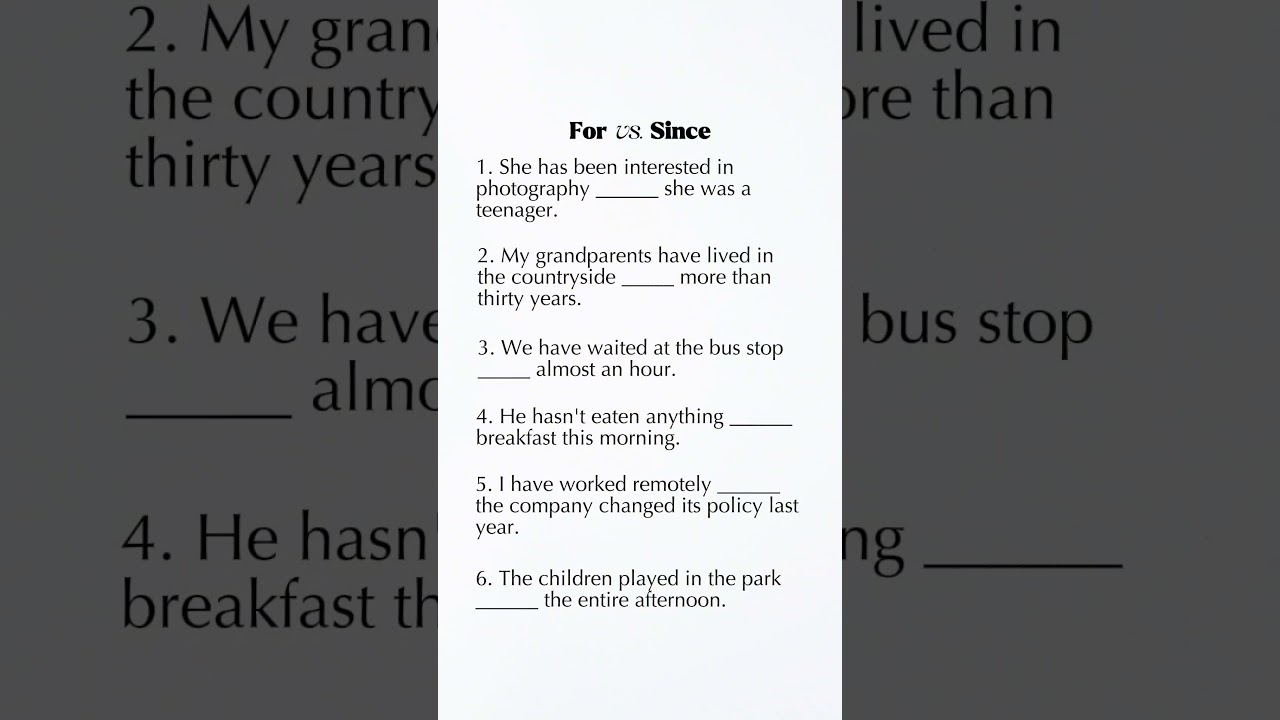
For vs Since Explained | English Grammar Quiz | Stop This Common Mistake Fast | Learn Now!
speakenglishwithjoe2023
401 views•2026-05-18

Near, Close to, Next to, Beside, Nearby & Close by in English
EnglishEvolution
7K views•2026-05-15

Words from Indian languages borrowed in ENGLISH| Make Your Vocabulary Advanced with Prof. Sumita Roy
SumitaRoysEnglishclassroom
320 views•2026-05-17

Learn ABCD Alphabet Song A to Z | Phonics for Kids | A for Apple | English Varnamala | अ से अनार
rajrb3586
195 views•2026-05-16

#LearnEnglish with Sabrina Carpenter ✨
LearnEnglishWithTVSeries
13K views•2026-05-19

“Use of ‘THAT'S WHY’ | Speak English Like a Pro” #englishgrammar #spokenenglish #learnenglish
YOURENGLISH-2M
108 views•2026-05-17

How to use the subjunctive in Spanish #learnspanish
LearnSpanishBabbel
2K views•2026-05-17


