High-speed rail construction requires extreme precision. Platform height, rail alignment, cable routes, drainage, slopes, and safety clearances must work together before a single train can arrive. Track bed slabs are poured, drainage channels, cable ducts, service trenches, and platform edges are built with millimeter-level accuracy because high-speed rail does not forgive mistakes.
安装我们的扩展,即时搜索任意视频内容
The Impossible Train Station – How China Built the World’s Largest Train Station on a Mountain本站收录:
🏔️ Built on extreme mountain terrain… 🚄 One of the largest and most ambitious railway stations ever constructed. This documentary takes you inside China’s incredible mountain train station megaproject — a massive transportation hub designed to connect high-speed rail networks across challenging landscapes. 🏗️ Discover the full construction process: From mountain excavation and tunnel integration to giant steel structures, rail platforms, and advanced transportation systems built at enormous scale. ⛏️ How do engineers build a giant train station on mountainous terrain? 🚄 How are high-speed rail lines connected through tunnels, bridges, and steep elevations? ⚙️ And how does China manage passenger flow and transportation inside one of the world’s largest rail hubs? 🚧 The project required precision engineering, large-scale earthmoving operations, and advanced railway infrastructure technology to overcome difficult geological conditions. 🌍 Designed to support future economic growth and regional connectivity, the station represents the next generation of transportation infrastructure. 🚄 This is where mountains become megaprojects — and where engineering transforms impossible terrain into global connectivity. #TrainStation #ChinaEngineering #HighSpeedRail #MegaProject #RailwayInfrastructure
Hello everyone and welcome back to the channel. Today we are going deep inside one of China's most ambitious railway projects, Chongqing East Railway Station, a gigantic high-speed rail hub built in one of the most difficult urban landscapes on Earth. This is not just another train station. This is a mountain city mega structure, a transportation machine, a railway terminal, metro hub, bus interchange, taxi center, road network, pedestrian plaza, and urban gateway. all stacked together inside the dramatic terrain of Chongqing. And the biggest question is this. How do you build a massive modern railway station in a city where the land rises, drops, bends, and breaks like a mountain range? To answer that, China had to build more than a station. It had to reshape the ground, tame the slopes, support a giant roof, construct a multi-level concrete base, install huge rail systems, and connect everything into one smooth transport machine. But before we begin, make sure to subscribe and follow the channel for more incredible mega project stories from around the world. If you love engineering, construction, railways, tunnels, bridges, airports, and impossible infrastructure, this is the place for you. Now, let's begin.
Chongqing is not a flat city. It is famous for mountains, steep roads, bridges, tunnels, cliffs, and layers of urban infrastructure stacked on top of one another. In many cities, engineers can simply clear a flat site and begin construction. But here, the land itself becomes the first engineering challenge.
Before the station could rise, construction crews had to prepare the mountain terrain. Survey teams mapped every slope, every elevation change, every future platform level, and every connection to roads, metro lines, and urban districts. Then came the earthworks. Huge areas were cut, filled, reinforced, and stabilized. Retaining walls were built to hold back the terrace land. Slopes were strengthened.
Temporary construction roads were opened. Drainage routes were planned carefully because in a mountain city, water is not a small problem. It can become a structural threat. Only after the ground was controlled could the real station begin. The first major structure was the multi-level concrete podium.
This podium is the hidden giant of the project. It carries the station hall, supports transfer levels, holds service spaces, connects ramps and roads, and links the passenger concourse to the rail platforms. Layer by layer, workers built columns, beams, floor slabs, cores, ramps, and transfer decks. It was not a simple building rising from the ground. It was a stacked transportation platform designed to handle passengers moving in different directions at different levels. Above this podium, the station began to take shape. The rail corridor was prepared next. Long platform zones were formed. Track bed slabs were poured. Drainage channels, cable ducts, service trenches, and platform edges were built with extreme precision. Every millimeter mattered because high-speed rail does not forgive mistakes. The platform height, rail alignment, cable routes, drainage, slopes, and safety clearances all had to work together before a single train could ever arrive. Then came the part that defines the visual identity of Chongqing East Railway Station. The roof, a huge dark silver gray roof, stretches across the station like a giant horizontal canopy. It is not just a cover. It is the architectural crown of the entire hub. Steel roof trusses were assembled bay by bay. Temporary support towers held the structure in place while massive beams and truss sections were lifted, bolted, welded, and aligned. Once the steel skeleton was stable, workers added roof decking, waterproofing, drainage layers, insulation, dark gray metal roof panels, and smooth white roof edges. But the roof also had one of the station's most important features, elongated skylights.
These long leafshaped openings bring daylight deep into the station hall.
During construction, workers first built raised skylight curbs, installed support rails, added gaskets and brackets, then carefully lowered transparent panels into place. Each skylight had to be sealed, tested, and aligned with the surrounding roof panels. Water testing was carried out across the roof to make sure rain would flow into gutters and drains instead of leaking into the hall below. Only after the roof was stable could crews begin removing temporary support towers. This was one of the most delicate moments of the project. The giant roof had to begin carrying itself.
Engineers monitored deflection.
Hydraulic jacks released loads slowly.
Sensors measured movement. Temporary towers were removed one by one. The station hall opened up beneath the roof, revealing the enormous interior volume that would later become the passenger space. Then came the station's most iconic structural feature, the Hang treelike columns. Inspired by the symbolic tree forms of Chongqing, these sculptural columns support and frame the station facade. They are not ordinary straight columns. They branch upward like tree trunks reaching into the roof canopy. First came the steel cores.
Cranes lifted vertical column sections onto base plates. Workers bolted them into the concrete podium. Then curved branch arms were attached at the top.
These arms spread outward and connected toward the roof edge. At this stage, they looked like raw steel skeletons.
Then secondary ribs and attachment rails were added. Finally, smooth white silver cladding panels were installed around the trunks and branches, transforming bare steel into the elegant treelike facade that gives the station its identity. Behind these columns, the glass curtain wall was built. Mullions and transoms formed the grid. Glass panels were lifted by suction equipment and installed bay by bay. Seals, gaskets, pressure caps, and weather proofing were added until the facade became a transparent skin behind the white structural trees. Now the outside of the station was becoming recognizable. But inside another world had to be built. The grand waiting hall needed interior tree columns, curved ceiling systems, escalators, ticket control zones, lighting, MEP systems, floors, railings, and passenger circulation routes. Interior columns were installed in a similar way. Steel cores first, branch arms next, subframes after that, then smooth white silver cladding. Above them, workers assembled a curved tube rib ceiling system that follows the flow of the space. Hidden above the ceiling, crews installed ventilation ducts, cable trays, fire safety pipes, lighting supports, access hatches, and electrical systems. Below, the floors were leveled and finished with large stone or terraso slabs.
Escalator voids were reinforced.
Escalator trusses were lifted into place. Mechanical components, steps, ballastrades, handrails, and landing plates were installed. Ticket gate bases, lane barriers, conduits, data cables, lighting systems, CCTV mounts, speaker housings, and emergency systems followed. The station was becoming more than a structure. It was becoming a working machine. Then the railway systems entered the scene. Platform surfaces were paved and protected. Track bed slabs were prepared. Rail fastener base plates were anchored. Long rail sections were lifted into place, aligned, fastened, adjusted, and checked for high-speed tolerances. Kate mast bases were installed beside the track lanes. Masts were raised. Cantal lever arms were attached. Messenger wires and contact wires were strung across the rail corridor. Droppers, insulators, grounding systems and tensioning equipment were installed and checked.
Then came signaling. Balles, axle counters, signal posts, equipment cabinets, cable troughs, communication lines, and platform equipment were connected into one railway control system. Before any public train could arrive, the station entered a long testing phase. First came static inspections. Engineers checked rail gauge, fastener torque, platform clearances, catenary height, grounding resistance, signal equipment, lighting circuits, cable continuity, and emergency systems. Then came controlled energization. The overhead system was powered in restricted test zones.
Voltage was measured, insulators were checked, emergency shutdown procedures were verified. Only after that could an empty test train enter. Slowly, carefully, a high-speed train rolled into the station at walking speed.
Engineers measured platform gaps, door alignment, panagramraph clearance, signal detection, axle counter response, and emergency stop communication. This was not yet public service. This was proof that the station, the platforms, the trains, the wires, the signals, and the control systems could all work together safely. Meanwhile, outside the station, the landside transport areas were being completed. The front plaza was paved. Drainage channels were installed. Dropoff ramps were surfaced.
Bus bays, taxi zones, curbstones, ballards, shelter frames, lighting poles, planters, and pedestrian crossings were finished. The station was now connected not just to trains, but to the city itself. Buses could arrive, taxis could queue, private cars could drop off passengers, pedestrians could cross the plaza, metro links could connect underground. Every movement had its own lane, level, route, or corridor.
Then came the final stage, cleaning, inspection, rehearsal, and opening.
Protective covers were removed, glass was clean, floors were polished, escalators were tested, ticket gates were checked, emergency lighting, fire systems, CCTV, public address lines, elevators, accessibility routes, and backup power were all rehearsed. Staff walked through passenger routes before the public arrived. They tested entry flows, platform access, emergency evacuation, train arrival procedures, and crowd management. Finally, the station was ready. The doors open.
Passengers entered through the glass facade beneath the white tree columns.
They crossed the polished concourse under the curved ceiling and skylights.
They passed through ticket gates, rode escalators, and moved toward the platforms. On the tracks below, high-speed trains arrived and departed beneath the giant roof. Outside, buses, taxis, cars, pedestrians, and metro connections all moved through the multimmoal interchange. What began as mountain terrain had become a transportation organism, a station built into a difficult landscape, a hub where architecture, rail engineering, urban planning, and passenger movement all merge into one system. Chongqing East Railway Station is more than a building.
It is a symbol of how modern infrastructure can transform a complex city. It shows how engineers can take steep land, layered roads, massive passenger flows, high-speed rail systems, and iconic architecture and combine them into one working mega project. From earthworks to foundations, from concrete podium to steel roof, from skylights to tree columns, from platforms to electrified tracks, from testing to operation, this is how China built one of the most ambitious railway stations in the mountain city of Chongqing. And if you enjoyed this journey, don't forget to subscribe, follow the channel, and turn on notifications so you don't miss the next incredible mega project story. Thank you for watching, and I'll see you in the next video.
in a Why'en Heat.
Heat.
Heat. Heat.
相关推荐

How Ancient Japan Defies Earthquakes Without A Single Nail ⛩️⚡ #shorts
JapanBeyond_History
860 views•2026-05-17

The Brake Temperature Explained
PositiveAttitudeAviation
833 views•2026-05-18

Corebooting The Last Great ThinkPad
theradlectures
324 views•2026-05-22

NC750X DCT 2026 - Shock Therapy - Little links, Big difference
Adventures_NC750X
185 views•2026-05-22

The Most Expensive Commercial Airplane in the World | Worth $445 Million!
AeroMonitor
108 views•2026-05-20

Range Rover Sentinel 2026 – The Ultimate Armored Luxury SUV! 🔥🛡️
AutoDriveMedia
150 views•2026-05-17

Lincoln MKX 3.7 Liter AWKWARD FAILURE What Happened? @I_Do_Cars
BeardedFordTech
397 views•2026-05-18
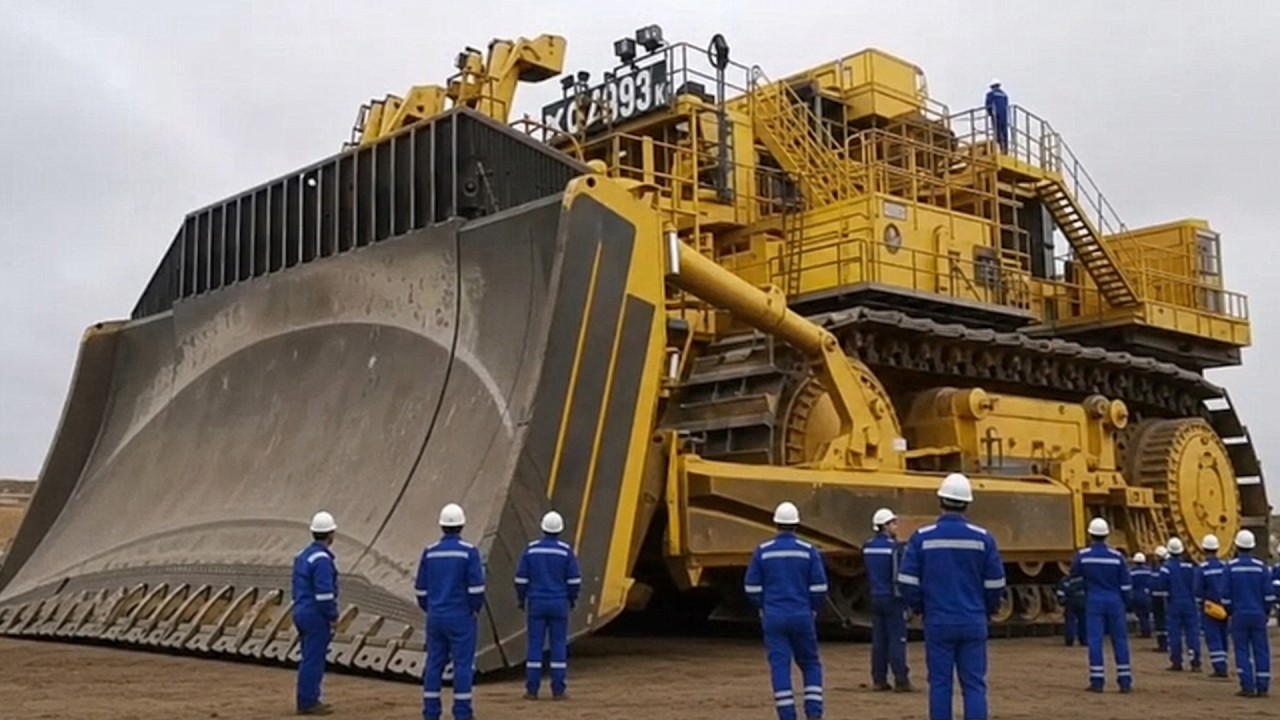
350 Most Dangerous And Biggest Heavy Equipment Machines Working At Another Level
TechVibe8
771 views•2026-05-18


