Scientists believe the impossible brightness of superluminous supernovae is driven by a magnetar, a city-sized neutron star born from the collapsing core of the original star. The magnetar spins hundreds of times per second, generating magnetic fields trillions of times stronger than Earth's, and feeds energy back into the expanding explosion like a cosmic engine.
Installez notre extension pour rechercher instantanément dans n'importe quelle vidéo
First Gamma-Ray Superluminous SupernovaIndexé :
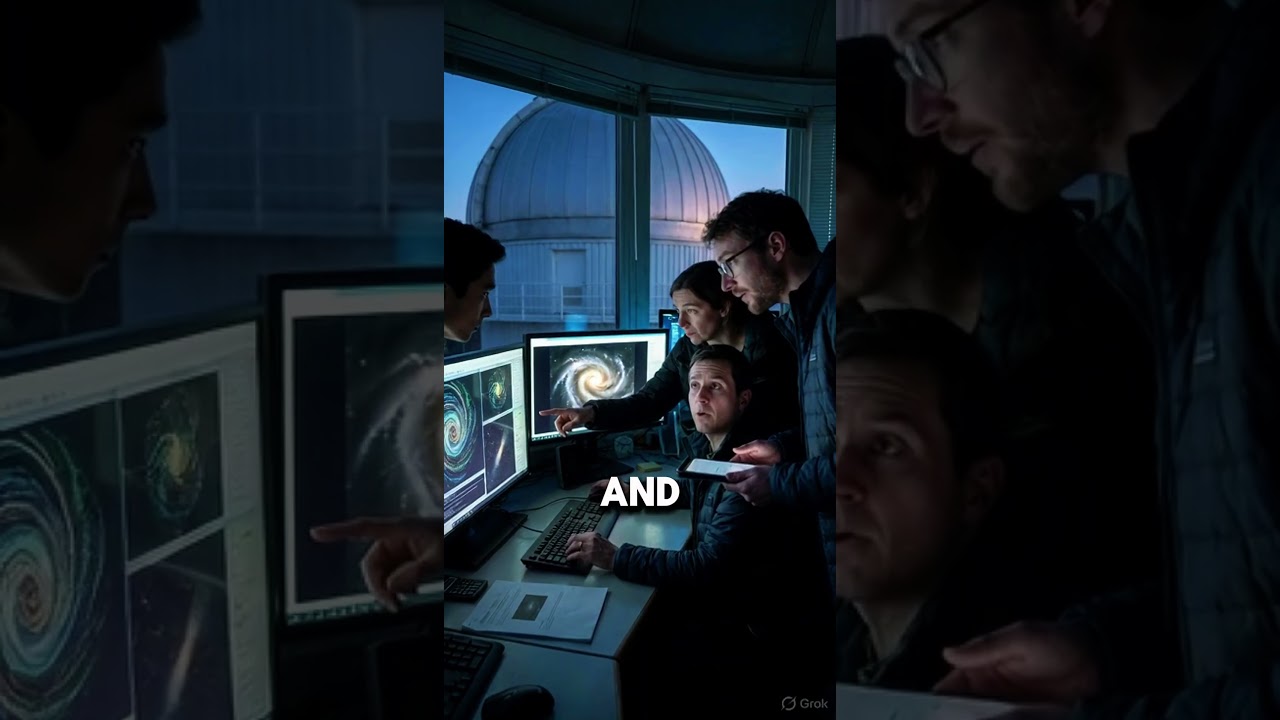
For 20 years, astronomers searched the sky for something they couldn't even be sure was real. This week, NASA finally found it. NASA's Fermi Space Telescope has just confirmed the first ever clear detection of gamma rays coming from a superluminous supernova — one of the most extreme and mysterious explosions in the known universe. This isn't just any supernova. We're talking about a stellar explosion so unimaginably powerful that it produces 10 times more light than a normal supernova and briefly outshines every single star in its entire galaxy combined. The explosion, known as SN 2017egm, happened 440 million light-years away from Earth. And Fermi kept detecting its gamma rays for over 100 days after the initial blast. That alone tells scientists something extraordinary is going on beneath the surface of this event. So what could possibly be powerful enough to sustain that kind of energy output? The leading answer is something called a magnetar. Imagine a dead star compressed down to the size of a city — spinning hundreds of times every single second, wrapped in magnetic fields trillions of times stronger than anything on Earth, and pumping energy back into the surrounding explosion like a cosmic engine that refuses to stop. It sounds like science fiction. It isn't. Out of thousands of supernovae studied over two decades of searching, only one gave scientists the definitive signal they were looking for. Just one. And that single detection is already reshaping how we understand the most violent events the universe is capable of producing. This discovery doesn't just answer old questions. It opens up entirely new ones about what's possible at the far edges of physics and space. Watch to the end — because the final question we ask might be the biggest one of all.
For 20 years, astronomers searched for something they weren't sure existed.
This week, NASA found it. NASA's Fermi telescope confirmed the first clear detection of gamma rays from a super luminous supernova, a stellar explosion so powerful it produces 10 times more light than a normal supernova and briefly outshines its entire galaxy. The explosion [music] called SN2017EGM occurred 440 million light-years away.
Fermi detected its gamma rays for over 100 days after the blast. What's driving this impossible brightness? Scientists believe it's a magnetar, a city-sized neutron star born from the collapsing core of the original star spinning hundreds of times per second, generating magnetic fields trillions of times stronger than Earth's and feeding energy back into the expanding explosion like a cosmic [music] engine. Thousands of supernovae were searched. Only one gave a definitive answer, and it changed how we understand the most violent events in the universe. What do you think is the most powerful force in the universe?
Vidéos Similaires

Titan's Methane Lakes Mirrored Terrain #Shorts
dailydeepspace
693 views•2026-05-16

The Only Planet That Rotates BACKWARD! 🤯#spacefacts #astronomy #venus #solarsystem #cosmic
SPACETALK-177
813 views•2026-05-16

They Found Beaches 200 Feet Beneath The Atlantic 🌊#abyss
AbyssBlueOcean
4K views•2026-05-17

7 MINUTES AGO: Euclid Telescope Just Captured NEW TERRIFYING Images!
PHN413
107 views•2026-05-19
James Webb Found an Impossible Galaxy 😳
ASTROVANTOR
621 views•2026-05-16

Something Hit Siberia in 1908 — Scientists Didn't Go Look for 19 Years 🌌
ClipConnectionReal
113 views•2026-05-16

Kilauea Monitoring - May 19th - USGS model window May 22 - 26 - Taco Tuesday
PizzaFridayDon
232 views•2026-05-20

What If the Sun Disappeared Right Now #shorts
AstraNova-j6c
647 views•2026-05-21


